days
hours
minutes
seconds
Fantastic texts were originally influenced by the accounts of European travelers and their exotic portrayals of the lands and countries they journeyed. The translation of the famed book The Thousand and One Nights (along with its other versions) has substantially contributed to the evolution of fantastic genres including the uncanny, the marvelous, and the supernatural in France and later in England. In the nineteenth century, this type of writing genre attended to the newly-emerging philosophical movements and their exigencies becoming a means of challenge to modern life frustrations and a formula of expression of deprivation, oppression, and repression. At other times, it served as a purely imaginary development to achieve artistic pleasure.
Unlike novels and short stories, fantastic transcripts do not epitomize a specific genre per se, but rather, colorize the elements of the literary genre with varied degrees, shades, and stances. In fact, there is no consensus on the definition of “fantastic narrative” as it transcends the conventions of mimesis, and because it is open to multiple combinations of narration. Most studies dealing with fantastic texts typically address the role of Tzivitian Todorov, who confined the fantastic text and its definition to the “hesitation” common to both reader and character. Such “hesitation” is twofold: either the laws of reality are able to provide an explanation of the phenomena, or, there is a need for new laws that are able to do so.
Still, it is necessary to nurture a holistic view of fantastic literature that is unobstructed by “time of hesitation” and which views the fantastic as a breach of reality and the ordinary. Certainly, to acquire the tribute of being “fantastic,” the text should conjure up all the elements of narration based on fantastic tendencies.
This conference focuses on the topic of the fantastic narrative between the past and the present. We specially invite papers for thematic sessions that report on research carried out in various disciplines. Perspectives addressed by these papers include, but are not limited to:
PDF format abstracts must not exceed 250 words to be written either in English or in Arabic and submitted no later than 30.1.2020
For correspondence:
Prof. Dr. Yaseen Kittani: Dean, Faculty of Humanities: [email protected] , Mrs. Saida Abu Sugier: [email protected] and Mr. Shaheen Shayeb: [email protected]
All abstracts should address one or more topics that are relevant to the themes of the conference and this relevance should be explicitly articulated in the submission. Authors will be notified regarding abstract acceptance by 29.2.2020.
Conference will be held on Sunday 19.04.2020.
Full papers must be submitted no later than 19.05.2020. The papers will be reviewed by the Conference Committee and will be judged on the basis of both individual and global criteria. Accepted submissions will be published in the Conference Book.

Prof. Yaseen Kittani

Dr. Fiad Haibi
Dr. Tawfiq Sayyidi

Dr. Muhammad Hamad

Dr. Samir Khalaily

Dr. Abdalla Tarabeih

Dr. Nadir Massarwi

Sadia Abu Sugier
Dr. Fiad Haibi

Shaheen Shayeb

Iman malak Garra

Samiya Haj Yahia

Mohammad Abu Much
Rabee Abu Much
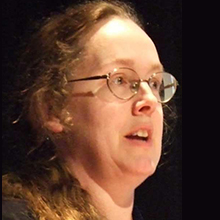
Diane Purkiss
Professor of English Literature, Oxford University Fellow and Tutor, Keble College Oxford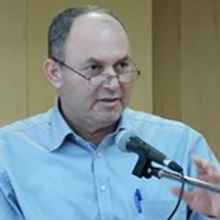
Ibrahim Taha
Professor of Arabic, Department of Arabic Language and Literature, Faculty of Humanities, Haifa University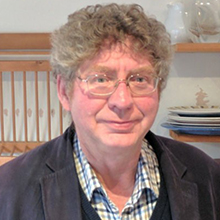
Rowland Wymer
Professor of English School of Humanities and Social Sciences at Anglia Ruskin University, Cambridge.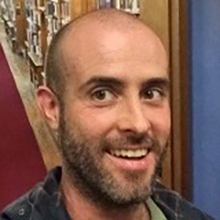
Rhys Williams
Lord Kelvin Adam Smith Research Fellow School of Critical Studies, College of Arts University of GlasgowAll Rights Reserved © Al-Qasemi Academy